Relaxation Techniques
It’s a common (and frustrating) truth: the more stressed we feel, the harder it can be to relax. Stress narrows attention, speeds the mind, and keeps the body in “doing mode.” That’s why relaxation works best when we approach it as a skill—something we practice in small, manageable ways, so it becomes easier to access when we need it most.
Relaxation is also a transferable skill. If you learn to settle your body before a dentist appointment, you can use the same skills before an exam, a difficult conversation, a medical procedure, or a healing session. Over time, your system learns: “I know this pathway back to calm.”
There are many ways to relax, and no single technique is right for everyone. Some people unwind best through movement and physical release; others through stillness and mindfulness. Most people benefit from having a small toolbox with options for different situations.
The more you can learn to reax yourself the more skilled you will become at helping your clients to relax.
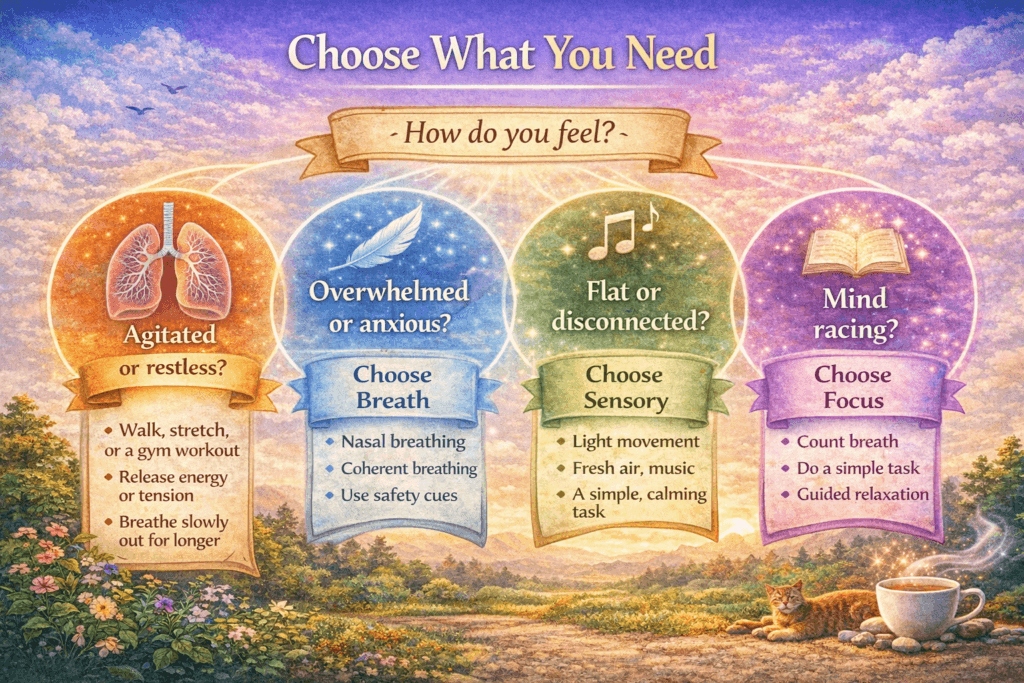
A simple way to choose the right technique
Different techniques work best depending on your stress state:
- If you feel agitated, restless, or over-energized: choose movement, grounding, or a longer exhale.
- If you feel overwhelmed, anxious, or panicky: choose slow breath, gentle sensory grounding, and safety cues.
- If you feel numb, flat, or disconnected: choose light movement, fresh air, music, or something engaging but soothing.
- If your mind is racing: choose structured focus (counting breath, guided meditation, repetitive tasks).
Physical relaxation techniques (body-based)
These methods help the body discharge stress and return toward balance.
Movement and exercise
- Yoga, qigong, tai chi
- Swimming, cycling, walking, stretching
- Any gentle structured exercise that supports rhythm and breath
Everyday grounding activities
- Gardening, housework, washing up
- Walking the dog, tidying, cooking
- Simple repetitive tasks can be surprisingly calming for the nervous system
Breath-based practices
- Extended exhale breathing: inhale gently, exhale a little longer (e.g., in 4, out 6)
- Coherent breathing: steady, even breathing (often 5–6 breaths per minute if comfortable)
- Three-part breath: belly → ribs → chest, then exhale slowly (supports fuller breathing)
(Tip: If you’re stressed, start with just 60 seconds. Small doses count.)
Heat and soothing body cues
- Soak in a warm bath or shower
- Use calming oils (lavender, chamomile) or a comforting scent
- Warm drinks can also provide a settling “signal” to the body
Therapeutic touch
- Massage, Indian head massage, hot stone therapy
- Gentle self-massage of hands, jaw, shoulders, or feet
- Holding a hand on the chest or belly can be calming and centring
Mindful and mental relaxation techniques (attention-based)
These approaches calm the mind by working with focus, imagery, meaning, and mental rhythm.
Meditation and visualization
- Short guided meditations (2–10 minutes)
- Visualizations such as “roots into the earth” or “safe place imagery”
- Body scan practices to release tension
Music
- Listening to music that genuinely works for you—calm is personal
- Some people relax with gentle instrumental tracks; others with familiar songs that feel supportive
Reading
- A comforting book, poetry, or reflective writing
- Avoid content that stimulates or activates (thrillers/news) if your goal is relaxation
Self-hypnosis
- Guided hypnosis recordings or scripts
- Helpful for sleep, anxiety reduction, and nervous system settling (especially when practiced consistently)
Triggers or anchors (conditioning calm)
A “trigger” can be a visual, scent, sound, or phrase that reliably evokes calm—because you pair it with relaxation repeatedly.
- A particular essential oil or hand cream
- A song or sound
- A calming image, symbol, or photograph
- A phrase such as: “I am safe right now” or “Soft belly, slow breath”
Over time, your nervous system learns the association, and the trigger becomes a shortcut back to steadiness.
Quick techniques for stressful moments (30–90 seconds)
These are useful when you don’t have time or privacy for a full practice:
- Exhale longer than you inhale for 6–10 breaths
- 5–4–3–2–1 senses grounding (5 things you see, 4 feel, 3 hear, 2 smell, 1 taste)
- Release the jaw and drop the shoulders (repeat 3 times)
- Press feet into the floor and feel your weight supported
- Name what’s happening: “I’m feeling stressed, and I’m breathing through it.”
Supporting clients safely
Relaxation should feel settling, not forced. Invite choice:
- Offer options (“Would you prefer movement, breath, or a visualization?”)
- Keep practices brief and accessible
- If a client becomes uncomfortable, encourage them to return to normal breathing, open eyes, or orient to the room
A gentle reminder
Relaxation isn’t something you achieve—it’s something you allow and practice. Start small. Consistency matters more than length. Even one minute can begin to shift your state.