The Science Behind Spiritual Healing
For centuries spiritual healing—whether through touch, intention, prayer, or focused awareness—has been dismissed by many as unscientific or purely anecdotal. Yet in recent decades, research from fields as diverse as neuroscience, psychoneuroimmunology, placebo studies, consciousness science, and bioelectromagnetics has begun to shed light on what may underlie this ancient practice. While no single mechanism fully explains spiritual healing, emerging science paints a provocative picture: human beings are far more interconnected, responsive, and energetically dynamic than conventional biomedical models once assumed.
Rather than disproving healing, science is slowly catching up with what healers have observed for millennia—that intention, compassion, presence, and subtle energy interactions can profoundly influence wellbeing. The following pages explore the leading scientific insights into spiritual healing, offering a framework that is both credible and deeply inspiring.
1. The Stress Response, Relaxation, and the Body’s Self-Healing Systems
One of the most well-established scientific foundations for spiritual healing lies in the body’s stress and relaxation responses. When a person feels safe, held, and deeply relaxed—as often occurs during healing sessions—their physiology shifts dramatically.
Harvard physician Herbert Benson identified the “relaxation response,” a measurable state associated with:
- Reduced blood pressure
- Slowed heart rate
- Lower cortisol
- Improved immune function
- Enhanced digestion and cellular repair
(Benson, 1975)
Spiritual healing reliably induces this response. Clients often describe sensations of warmth, peace, or energy flow, but even without subjective experience, measurable physiological changes occur.
In this sense, healing acts as a powerful counterbalance to modern stress—one of the greatest disruptors of health. When the nervous system is soothed, the body’s natural healing potential is amplified, offering a scientific rationale for many of the benefits clients report.

2. Placebo, Expectation, and the Healing Power of Relationship
The word “placebo” is often used dismissively, yet placebo research offers compelling evidence that belief, expectation, and human connection produce real physiological effects.
Studies show that placebo responses can:
- Reduce pain via endogenous opioids
- Alter immune markers
- Improve mobility in Parkinson’s patients
- Change brain activity on MRI scans
(Benedetti, 2009)
But spiritual healing is not “just placebo.” Rather, healing incorporates many of the mechanisms that make placebo powerful—hope, trust, presence, meaning, and the feeling of being cared for—and then extends beyond them.
Healers provide:
- Sustained attention
- Deep empathy
- A non-judgemental, compassionate relationship
- A belief in the client’s innate capacity to heal
These relational elements have measurable impact: improved emotional regulation, reduced inflammation, and increased resilience. Far from undermining healing, placebo science validates the profound power of mind, relationship, and expectation, all of which play central roles in spiritual healing.
3. Energy Medicine and the Human Biofield: A New Frontier
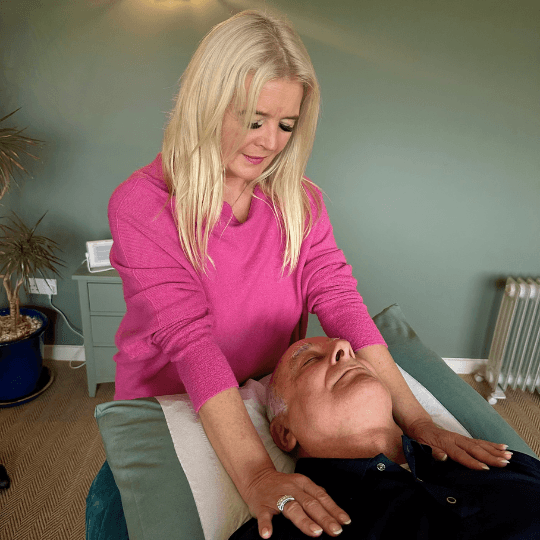
One of the most intriguing scientific frameworks for spiritual healing emerges from research into the human biofield—the complex pattern of electrical, magnetic, and subtle energies produced by living systems.
The National Institutes of Health (NIH) defines the biofield as a “massless field, not necessarily electromagnetic, that surrounds and permeates living beings.”
(NIH, 1994 Conference on Biofield Science)
Evidence suggests:
- The human heart generates an electromagnetic field measurable several feet beyond the body (McCraty, HeartMath Institute).
- Cells communicate through electromagnetic signaling as well as chemical pathways (Ho, 1998).
- Brainwaves synchronize between individuals during moments of focused attention or compassion (Lutz, Davidson, 2004).
Biofield therapies such as Reiki, Therapeutic Touch, Healing Touch, and spiritual healing have been studied across hundreds of clinical trials. A major systematic review found positive effects on:
- Pain reduction
- Anxiety
- Cancer-related symptoms
- Heart rate and blood pressure
- Wound healing
(Jain & Mills, 2010)
While mechanisms remain uncertain, researchers propose that healers may influence the biofield via coherent intention, emotional resonance, and subtle electromagnetic interactions. This aligns with many spiritual traditions, which describe healing as alignment or balancing of the body’s energetic system.

4. Consciousness and Intention: The Most Radical Scientific Shift
A growing body of research suggests that consciousness itself may be fundamental, non-local, and capable of influencing physical systems.
Studies in intentional healing, prayer, and distant healing show statistically significant effects in:
- Cardiac patient recovery
- IVF success rates
- Wound healing
- Bacterial growth and enzyme reactions
(Dossey, 2013; Schlitz et al., 2005)
Experiments at institutions such as Princeton’s PEAR Lab demonstrate that human intention can subtly influence random number generators—machines designed to be unpredictable.
Neuroscience adds another dimension: when healers direct intention, their brains enter coherent, synchronized states similar to advanced meditation practitioners. These states affect heart rhythms, emotional centres, and social bonding hormones such as oxytocin.
It raises profound questions:
- Is consciousness capable of influencing biological systems at a distance?
- Are healers accessing a field of interconnection that science has yet to map?
- Is healing a by-product of coherence—mind, heart, and intention operating in synchrony?
These questions are not fringe—they are central to emerging scientific dialogues.

5. Psychoneuroimmunology: How Thoughts and Emotions Affect the Immune System
Psychoneuroimmunology (PNI) provides a robust scientific link between mind, emotion, and physical health.
Research shows:
- Stress suppresses immune function
- Positive emotional states enhance antibody production
- Social support improves cancer outcomes
- Mind–body practices change gene expression related to inflammation (Black & Slavich, 2016)
Healing facilitates the emotional states—calm, connection, hope—that support immune function. Many clients report reduced symptoms, faster recovery, and better coping during illness. PNI suggests these effects are not mysterious but biologically grounded.

6. Healing as a Catalyst for Whole-Person Wellbeing
While science continues to investigate mechanisms, one conclusion is increasingly clear:
Healing works because it addresses the whole person.
It engages:
Meaning
Biology
Emotion
Energy
Consciousness
Relationship

This multidimensional approach fills gaps left by conventional medicine, which excels at treating symptoms and diseases but often struggles to address the deeper aspects of suffering—fear, loneliness, trauma, existential distress, and the longing for connection.
Healing responds to these unmet needs, providing:
- A sense of being seen
- Emotional expression
- Inner peace
- Meaning and hope
- A return to balance
Science validates these as central to health. Indeed, the World Health Organization now defines wellbeing as “a state of complete physical, mental, and social wellbeing—not merely the absence of disease.”
Healing aligns perfectly with this definition.
7. A Thought-Provoking Closing: What Science Cannot Yet Explain
Despite promising research, much about spiritual healing remains beyond the grasp of current scientific frameworks. Yet this should not be seen as a failing. Throughout history, science has often followed behind experience:
- Germs existed before microscopes.
- Electricity existed before meters.
- Gravity existed before equations.
So too, perhaps healing is real long before science has the tools to measure it fully.
Modern evidence suggests that healing may be the result of complex, dynamic interactions among intention, consciousness, energy, physiology, and relationship. No single mechanism captures the whole picture—but taken together, they form a compelling argument: spiritual healing is not outside science; it is expanding the boundaries of what science is capable of understanding.
The emerging consensus is not that healing must fit into science, but that science must grow to include the full reality of healing.
Selected References
- Benson, H. (1975). The Relaxation Response.
- Benedetti, F. (2009). Placebo Effects: Understanding the Mechanisms.
- Black, D. S., & Slavich, G. (2016). Mindfulness meditation and gene expression. Psychoneuroendocrinology.
- Dossey, L. (2013). One Mind.
- Ho, M.-W. (1998). The Rainbow and the Worm: The Physics of Organisms.
- Jain, S., & Mills, P. (2010). Biofield therapies review. Global Advances in Health and Medicine.
- Lutz, A., & Davidson, R. (2004). Meditation and neural coherence. PNAS.
- McCraty, R. (2003). Heart coherence and electromagnetic fields. HeartMath Research Center.
- Schlitz, M., Radin, D., et al. (2005). Distant healing studies. Journal of Alternative and Complementary Medicine.
- National Institutes of Health (1994). Report of the Biofield Science Conference.